As a business owner or marketer, you’re likely constantly striving to make your website more visible and accessible to potential customers. In today’s fast-paced digital world, this means understanding the dynamic forces of Search Engine Optimization (SEO) and Generative Engine Optimization (GEO).
But here’s a common question I get from entrepreneurs and decision-makers alike: “Do I need both SEO and GEO for my website?”
The answer is yes, and here’s why.
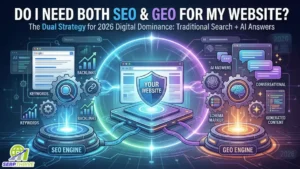
In 2026, SEO and GEO are not only complementary, they are mutually essential for maximizing your website’s performance. SEO helps you rank on traditional search engines, while GEO ensures your website is found by AI-powered search engines (like ChatGPT, Google AI, and other virtual assistants).
Together, these strategies ensure that your content reaches a broader, more diverse audience through both click-driven traffic and AI-generated answers.
Let’s break it down in a way that’s easy to understand, so you can start improving your website’s visibility, user engagement, and brand recognition today.
What is SEO and Why Do You Need It?
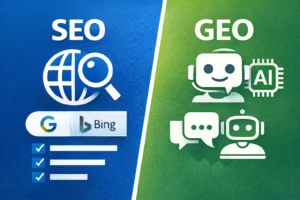
SEO (Search Engine Optimization) is a strategy focused on improving your website’s visibility in traditional search engines like Google, Bing, and Yahoo. These search engines still rely heavily on blue link results that users click on after conducting a search.
Here’s how SEO works:
- Keyword Optimization: Target specific search terms relevant to your business, products, and services.
- Backlinks: Quality backlinks from reputable sources signal to search engines that your content is credible.
- On-page Optimization: Elements like title tags, meta descriptions, and header tags help search engines understand the context of your content.
- Content Quality: Well-researched, engaging, and authoritative content helps you rank higher and provides value to users.
Why SEO matters:
SEO still drives the majority of organic traffic, meaning users who actively search for products or services like yours. However, as digital landscapes evolve, you need to ensure that you’re visible not just to traditional search engines but also to AI-driven search systems.
What is GEO (Generative Engine Optimization) and Why Do You Need It?
GEO (Generative Engine Optimization) focuses on optimizing your content for AI-driven search engines. In 2026, AI is taking over a lot of traditional search tasks, including providing instant answers directly in the search results.
AI tools like ChatGPT, Google AI Overview, and other virtual assistants now often serve answers directly to users, bypassing traditional click-through results.
Key Aspects of GEO:
- Content Structure: AI-driven systems look for clear, concise answers in easy-to-understand formats like Q&A, bulleted lists, and structured data.
- Schema Markup: Adding structured data (like Schema.org) allows both search engines and AI to understand the context and entities on your page.
- Conversational Content: AI models are trained to recognize natural, conversational language that mimics real-life interactions. Optimizing for this kind of content helps improve your visibility in AI-driven responses.
Why GEO matters:
With the rise of AI search tools, conversational search is more common than ever. GEO helps ensure that your business is seen and recognized by AI, even if the user doesn’t click on your website directly.
Why You Need Both SEO and GEO for Your Website?
1. Comprehensive Visibility Across Search Platforms
SEO helps you rank in traditional search results, while GEO ensures your content is selected for AI-generated responses. Both strategies ensure you’re seen, whether users click a link or get an answer directly from a chatbot or AI tool.
- SEO targets users looking for detailed information and willing to click on links.
- GEO targets users seeking quick, conversational answers that appear directly in search results.
2. The Symbiotic Relationship Between SEO and GEO
GEO actually depends on a strong SEO foundation. For AI tools to cite your brand as an answer, they need to find well-structured, authoritative content. Without strong SEO elements like content quality and backlinks, AI won’t view your website as a reliable source.
3. Different Intent Coverage
- SEO focuses on transactional intent, capturing users who are actively searching for something specific.
- GEO focuses on informational intent, reaching users who need quick, conversational answers without necessarily clicking.
By optimizing for both, you cover the full spectrum of user search intent.
4. Competitive Advantage
If your competitors are only focusing on SEO or GEO, you have the opportunity to outperform them by optimizing for both. Comprehensive visibility gives you an edge.
How to Combine SEO and GEO for Maximum Impact?
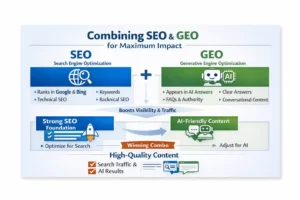
To make sure you get the most from both SEO and GEO, follow these tips:
1. Structure Content for Both
- Use headers (H1, H2, H3): These are great for SEO and help AI tools understand your content’s structure.
- Answer questions directly: Create FAQ sections with conversational, short answers that are easy for AI to extract.
- Use lists: Bullet points are great for both human users and AI models looking for quick answers.
2. Implement Structured Data (Schema Markup)
Use Schema.org to add structured data to your website. This helps both search engines and AI tools understand the context of your content. For example:
- Product schema for e-commerce websites
- FAQ schema for direct Q&A content
- Article schema for blog posts and informational pages
3. Keep Content Conversational
While SEO focuses on traditional long-form content, GEO requires more conversational, easy-to-read formats. Structure your content to answer questions in a way that AI models will recognize and pull from.
Comparison: SEO vs GEO
| Feature | SEO (Search Engine Optimization) | GEO (Generative Engine Optimization) |
| Primary Goal | Rank in traditional search results | Be selected as the preferred AI answer |
| Format | Keyword-focused, long-form text | Conversational, modular, and multimodal |
| Metrics | Traffic, CTR, keyword rankings | AI citations, brand mentions |
| Strategy | Backlinks, meta tags, site speed | Content clarity, structured data, entity recognition |
| Ideal Content | Blog posts, landing pages, product descriptions | Q&A, bullet points, FAQs, concise text |
Common SEO Mistakes Small Businesses Make in 2026
Many businesses struggle with SEO and GEO because they make key mistakes in SEO execution. Some of the most common mistakes include:
- Neglecting Local SEO
- Not Using Structured Data
- Ignoring Mobile Optimization
- Keyword Stuffing
- Failure to Optimize for AI Overviews
Each of these mistakes reduces the chances of your content being visible both in traditional search results and AI-generated responses. Make sure you don’t make these errors in your strategy.
Last Words
In today’s digital landscape, SEO and GEO go hand in hand. While SEO helps you rank in traditional search results, GEO ensures your content is found by AI tools, which are becoming an integral part of the search experience.
By combining these two strategies, you’ll maximize your website’s visibility, increase organic traffic, and ensure that your brand is recognized both by users and AI systems.
At SERP Thrive, we help businesses optimize for both SEO and GEO to ensure they get the best visibility in search engines and AI-driven platforms. Contact us today for a free consultation, and let’s take your website’s performance to the next level.
FAQs
What Is The Difference Between SEO And GEO?
SEO focuses on traditional search engines like Google, while GEO optimizes your website for AI-driven search tools like ChatGPT and Google AI. Both are necessary for maximizing visibility.
Is GEO Replacing SEO?
No, GEO does not replace SEO—it complements it. While SEO targets traditional search traffic, GEO optimizes your site for the increasingly popular AI-driven search results.
How do I Track GEO Results?
Tracking GEO results is a bit tricky, but you can measure brand mentions in AI responses and monitor the placement of your website in AI-driven summaries (like Google AI and other assistant tools).